
One of the blogs I enjoy reading is from the Weavings journal - a quarterly periodical from The Upper Room. It has some beautiful images and reflections to make you ponder. Here is one that I have particularly enjoyed and benefited from.
Do enjoy it too! 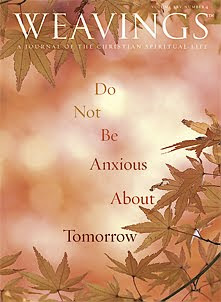
Famous Prayers - Celtic Prayer on Joy
Posted by Kath Williamson Labels: Celtic, Famous Prayers, joy, prayerI have recently attended my church's parish weekend in North Wales, which was on the theme of Celtic Christianity, so when I read this, it made me smile as I remembered the fun and laughter we had on the weekend.
Not everyone on the weekend was in the best health or in a 'good place' but, even in such times and circumstances, if we open our hearts to God, we can experience the joy of the Holy Spirit moving within us. This isn't the fleeting, frothy emotion that we sometimes call 'happiness' but a deep sense of God's abiding presence in all we are, all we see and all we do.
Enjoy the prayer!
A Celtic Prayer on Joy
As the hand is made for holding and the eye for seeing,
You have fashioned me for joy.
Share with me the vision that finds that joy everywhere.
In the wild violet’s beauty;
In the lark’s melody;
In the face of a steadfast man;
In a child’s smile;
In a mother’s love;
In the purity of Jesus.
A Maclean, Hebridean Altars, Moray Press, Edinburgh, 1937
Modified

Do you have any Christian acquaintances who, when telling you something about themselves, have started with the words, 'The Lord told me...'? I don't know about you, but there is something in my heart that sinks a little when I hear those words. And I have to admit that, in my younger days, I have used exactly that phrase on occasion. Ah, the impetuousness of youth!!
With a few more years (well, decades) under my belt, I have a more moderated and informed view of discerning God's will. And the first thing I would say is that, more often than not, it is not easy! In discussing this, I want to introduce the concepts of 'consolation' and 'desolation'. These are terms used particularly in Ignatian spirituality and within that context have a specific definition which it is useful to understand.
In Ignatian spirituality 'consolation' can be thought of as a sense of being at peace with God and with oneself. Have you heard someone speaking - perhaps in a meeting or on television - and you see that this person is at peace with themself and with their life at that moment? Things may not even be going particularly well for them, but you recognise instinctively an inner serenity and yes, even joy, despite what might be happening. This is what Ignatius of Loyola would call a state of 'consolation'.
Equally, you may know someone - or may be yourself - in a situation where you (or they) feel restless, unsure, even perhaps (but not necessarily) despondent. You know that at some deep level, things aren't 'quite right.' At these moments it is likely that your spiritual life is taking a bit of nose-dive, or you are disinterested in the things of the Spirit. This, Ignatius would refer to as a state of 'desolation'.
It is important if you use these terms in a spiritual sense - and particularly relating to discernment - that you realise that the everyday meaning of these words can be somewhat different to the Ignatian definition.
Now, having defined some terms, how do we interpret these two states and how do we use them in a process of discernment. Well, let me talk a little here about my current situation to try to shed some light on this. The year 2010 has been an eventful one for me. Some of those events have involved loss - of people, work and mobility - and most of the events have involved change and transition. I have a sense of being on the threshold of a new phase of life. In that situation, I have started to re-evaluate some things and consider where I would like to be in five or ten years time - and knowing that it will be very different from where I am today. In this situation, I need to be able to discern what is right for me, hopefully to discern what God may me moving me towards, and to make decisions which relate to my future.
So how do I go about doing this?
Well, I have acquired a set of principles through the years which I use as my base. Let me share them with you.
- If its not blindingly obvious, don't rush!
- Talk, talk talk - particularly with those whose opinions I respect
- Stay soaked in the scriptures and in prayer (consider a retreat)
- Try not to demand 'bolts of lightning' from God
You notice that on the last point, I say 'try not to...' I am a realist, and I know that I, just as much as other people, have a tendency to say to God, 'Please give me a sign!'
Now having followed my basic principles, I have to then come to a decision/decisions on the way forward. And it is then that the concepts of consolation and desolation come into their own. What course gives me a sense of peace, of right-ness? Which decision enhances my relationship with God and deepens my prayer life?
Even then, it is sometimes hard to answer these questions, so then what I tend to do is ask myself, 'Now, if I made this decision, how would I feel one year down the line? And how would I feel if it turned out badly?'
There will be some Christians out there who, if they read this, will be saying - too much about feelings in all this. All I would reply is that God made me in God's image - with feeling, intuition and imagination. These are God-given attributes, and provided we use them embedded in scripture, reason and the opinion of others in the church, then I believe that we are on safe territory.
Any thoughts to share?
With blessings.
We hear much these days of the global recession, job losses, cuts and welfare reform. In the midst of our own problems and worries, we can lose sight of those even worse off than ourselves. It's good when we find ourselves doing this to remember Jesus' story of the widow's mite. If you need a reminder, here it is.
Mark 12:41-44
He sat down opposite the treasury, and watched the crowd putting money into the treasury. Many rich people put in large sums. A poor widow came and put in two small copper coins, which are worth a penny. Then he called his disciples and said to them, ‘Truly I tell you, this poor widow has put in more than all those who are contributing to the treasury. For all of them have contributed out of their abundance; but she out of her poverty has put in everything she had, all she had to live on.’
In the current climate, our charitable giving may be one of the first casualties of our new frugal ways, but there is one way that we can continue to support those people poorer than ourselves - even when we are counting the pennies.
Buy Fair Trade!
Yes, it is more expensive, but because the extra cost is spread over days, weeks and months, it is less noticeable and less painful.
Here is a poem to challenge you by Andrew Rudd. I have mentioned him before on this blog. Andrew is a Cheshire poet who, during 2006, was the fourth Cheshire Poet Laureate. 'This is a Fair Trade Poem' can be found in his book One Cloud Away from the Sky.
This is a Fair Trade Poem
This poem is made from
one hundred per cent recycled
words. It has not been tested
on animals. It has no additives
no artificial colouring.
Juanita’s poem is a sweet banana
fragrant, glowing. But the price
has fallen. ‘Dear teacher’ she says,
‘My children can no longer come
to school.’ This poem is made
from recycled words, but who
is listening?
Maria’s poem is a handful
of glinting coffee beans. She lets them
slide through her fingers. The price
has fallen. No clothes, no shoes
no medicine for the children.
This poem is made from recycled
words, but who is listening?
The supermarket poem is all noise
and colour. A price goes up
so we cross the aisle and choose
another brand, another packet.
Our lives are linked to their lives.
Their lives are linked to our lives.
This poem is made from recycled words.
Listen.

Many blessings as you enjoy your Fair Trade bananas and coffee!
Here are some words of Archbishop Oscar Romero about the nature of the church. Very challenging! I would have loved to have met him.
From The Violence of Love
A church that doesn’t provoke any crises, a gospel that doesn’t unsettle, a word of God that doesn’t get under anyone’s skin, a word of God that doesn’t touch the real sin of the society in which it is being proclaimed - what gospel is that? Very nice, pious considerations that don’t bother anyone, that’s the way many would like preaching to be. Those preachers who avoid every thorny matter so as not to be harassed, so as not to have conflicts and difficulties, do not light up the world they live in.
Oscar Romero
Archbishop Romero was outspoken about violations of human rights and social injustice in El Salvador and he became an advocate of liberation theology - which emphasises social justice and political activism. He was martyred in March 1980 whist taking a communion service in a hospital chapel.
A prayer of Archbishop Romero's can be found here.
Famous Prayers - Act of Hope - Augustine
Posted by Kath Williamson Labels: Augustine, Famous Prayers, prayer
Act of Hope
St Augustine of Hippo
For Your mercies' sake, O Lord my God,
tell me what You are to me.
Say to my soul: "I am your salvation."
So speak that I may hear, O Lord;
my heart is listening;
open it that it may hear You,
and say to my soul: "I am your salvation."
After hearing this word,
may I come in haste to take hold of you.
Hide not Your face from me.
Let me see Your face even if I die,
lest I die with longing to see it.
The house of my soul is too small to receive You;
let it be enlarged by You.
It is all in ruins;
do You repair it.
There are thing in it,
I confess and I know,
that must offend Your sight.
But who shall cleanse it?
Or to what others besides You shall I cry out?
From my secret sins cleanse me, O Lord,
and from those of others spare your servant.
Amen.
See also Late Have I Loved You by St Augustine
Psalm 23 Revisited - David Kossoff
Posted by Kath Williamson Labels: blessing, image, Kossoff, Psalms, shepherdFirstly, my apologies for the recent lack of posts - a family bereavement has taken me out of circulation for a while.
Next, let's get down to business!
Tonight I attended a Bible Study about Psalms. It was a fascinating evening, and one of the highlights was to read a paraphrase of Psalm 23 written by David Kossoff. I'm sure I would be breaching some copyright if I were to add the whole psalm here. So here is a taster - the first few verses... followed by the last. Enjoy it!
The Old Twenty-Third
by David Kossoff
Lord, you are my shepherd,
And I'm very pleased, for I'm a bit of a sheep.
You taught me how to stop rushing about,
How to lie down and doze in a green field.
To stand by still water, by a calm lake.
And it's so restful. I'm grateful.
I think you show me the right paths, your ways.
I ought to use them more, in your name.
Otherwise it's sort of wasting your time.
...
Your goodness and mercy will follow me.
    Every day of my life. I'm sure of it.
And on the last day, when I go from my house,
    I'll go to yours. And live there. For ever.
From Psalm 23 An Anthology by KH Strange & RGE Sandbach: The Saint Andrew Press, Edinburgh.
One of the phrases that David Kossoff repeated throughout the psalm was 'I'm grateful.'
And are we? Grateful?
When was the last time you counted your blessings? From simply being alive, to having possessions - such as the computer or phone on which you are reading this! It's very easy to get hung up on the things we don't have, the talents that we would have liked to possess, the attention that seems to have passed us by.
But, if you are reading this, you are very blessed. For a start, you can read. Or you have someone to read to you.
It is an excellent exercise to lie in bed at night and think of five blessings that have been yours during the last day. Try it tonight!
I have written before about Psalm 23 - you can read it here.
Subscribe to:
Posts (Atom)